Ionic Hair Dryer vs Regular Hair Dryer

An ionic hair dryer is worth paying extra for if you want faster drying and less frizz. A regular hair dryer is the better buy if you care more about lift, simplicity, or lower cost. Pick the wrong one, and you can pay more for results you barely notice, or lose the volume and control you actually want. Here’s how the two types differ in drying, finish, heat, and value.
| Factor | Ionic hair dryer | Regular hair dryer | Winner |
|---|---|---|---|
| Frizz and static control | Negative ions neutralize the positive charge in wet hair, which helps cut static and smooth the finish. | Drys hair with heat and airflow alone, so static and flyaways are more likely. | Ionic hair dryer |
| Drying speed | Can dry faster because ions help break down water droplets and move moisture off the hair shaft. | Can still dry hair well, but usually depends more on heat level and airflow than on ion action. | Ionic hair dryer |
| Volume and lift | Can leave hair flatter, especially if the model has strong ion output and little control over it. | Often better for airy lift because it does not actively smooth the cuticle in the same way. | Regular hair dryer |
| Budget and simplicity | Usually costs more, and some models add extra controls that matter only for certain users. | Often starts with lower prices, simpler controls, and fewer settings on basic models. | Regular hair dryer |
| Hair-type flexibility | Better when you want to fine-tune finish, and some models include an ion on/off switch. | Works well as a straightforward baseline for many hair types, especially if you want volume. | Tie |
How they dry and style hair
The difference is not “better heat” versus “worse heat.” An ionic hair dryer mainly changes how hair dries and finishes. A regular hair dryer mainly uses heat and airflow without that extra ion effect. That makes the real choice between smoother, faster drying and a simpler tool that can keep more lift.
What changes in drying behavior
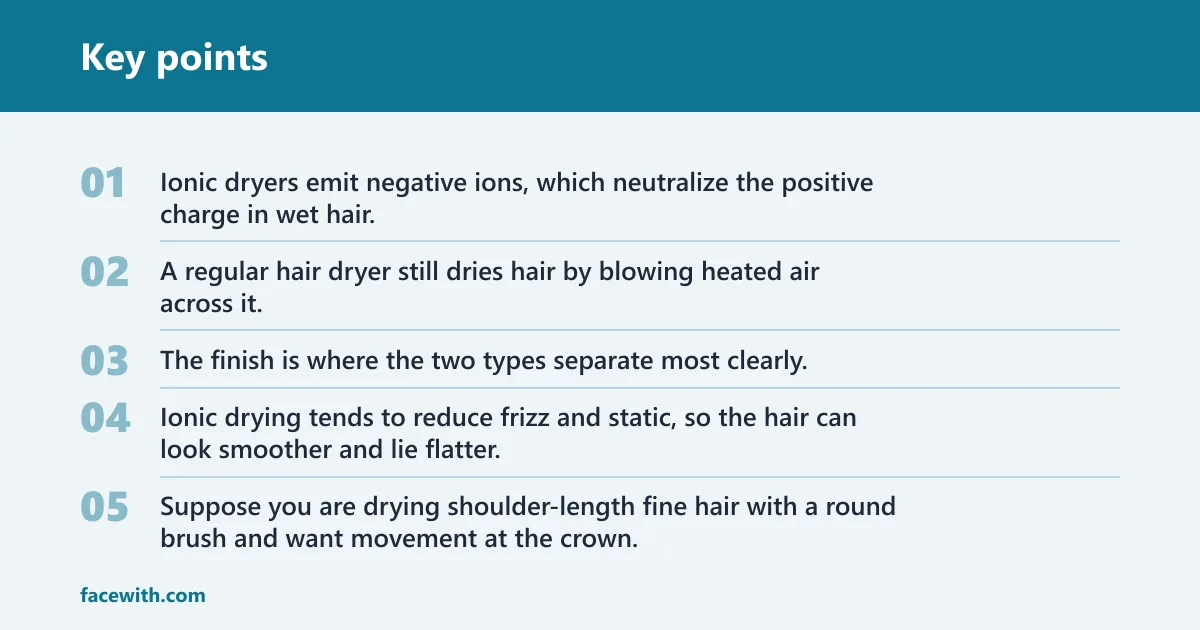
Ionic dryers emit negative ions, which neutralize the positive charge in wet hair. Wet hair holds water on and around the shaft, and the ion effect helps break those droplets apart so moisture moves off the hair faster.
A regular hair dryer still dries hair by blowing heated air across it. It can be perfectly adequate, but it usually relies more on heat alone, which is why the results can feel less controlled on frizz-prone hair.
What changes in finish and styling
The finish is where the two types separate most clearly. Ionic drying tends to reduce frizz and static, so the hair can look smoother and lie flatter. A regular dryer often leaves more lift at the root and a slightly airier shape, which can be a plus if volume matters more than sleekness.
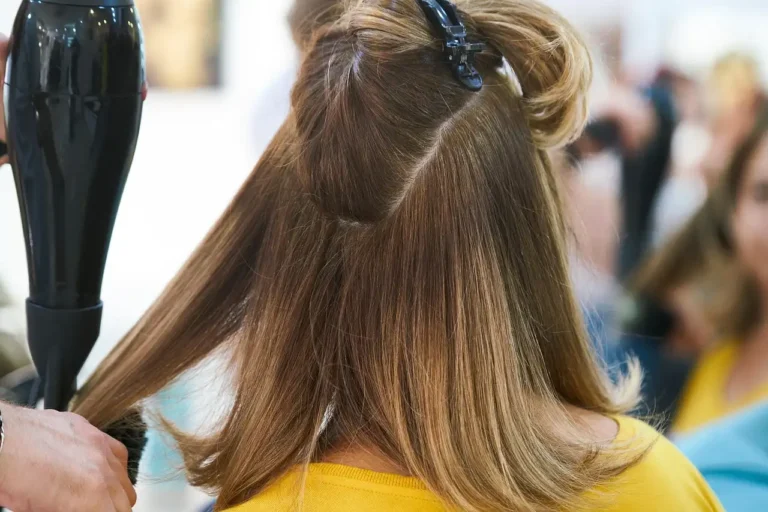
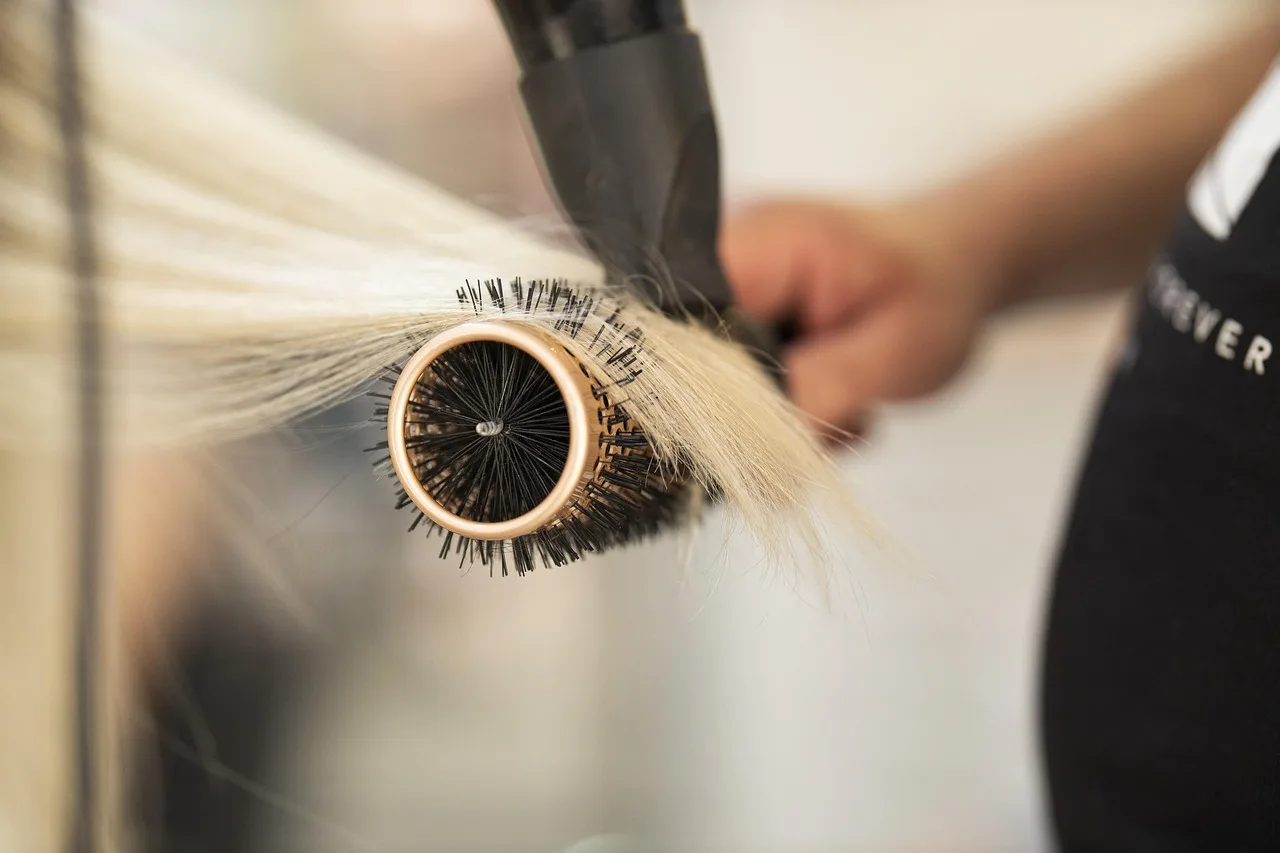
Suppose you are drying shoulder-length fine hair with a round brush and want movement at the crown. A regular hair dryer is often the better fit because it is less likely to over-smooth the hair and collapse the shape you built with the brush.
Hair dryer comparison table

This comparison breaks the choice into everyday buying factors rather than one vague “performance” score. The winner changes by goal, and that is the part many buyers miss.
| Decision factor | Ionic hair dryer | Regular hair dryer | Winner |
|---|---|---|---|
| Finish after drying | Smoother, less static, less frizz for many users. | More texture and lift, but less polish. | Ionic hair dryer |
| Drying efficiency | Often faster, especially when ion output is strong. | Depends mostly on airflow and heat. | Ionic hair dryer |
| Root lift | Can flatten volume if the ionic effect is strong. | Usually easier to keep lift and body. | Regular hair dryer |
| Up-front cost | Often higher. | Usually lower. | Regular hair dryer |
| Styling control | Best when the dryer has multiple heat and speed settings and an ion switch. | Best as a simple baseline tool. | Tie |
| Best fit for fragile hair | Can help when lower frizz and lower heat exposure matter. | Can work, but may need more care with heat selection. | Ionic hair dryer |
Frizz control
Ionic drying wins here because negative ions are linked to frizz reduction. They neutralize the charge that builds up as hair dries, which leaves the surface smoother and less staticky.
That said, frizz control is not the same as healthy hair by itself. A dryer with poor heat control can still create problems, even if it uses ionic technology.
Drying speed
Ionic hair dryers can speed drying, but the benefit is not magic. Strong airflow, adequate wattage, and a motor built for steady output still matter, and the best results usually come from a combination of those factors rather than ions alone.
Professional models often use AC motors and can reach 1,800 to 3,600 watts. Consumer models usually use DC motors and sit in the 800 to 1,800 watts range, so the motor and wattage often shape drying speed as much as the ion feature does.
Volume
Regular dryers usually win for lift. If your styling goal is a fuller root, an ionic dryer can work against you by smoothing the cuticle and reducing the roughness that helps hair hold volume.
A common first-timer mistake is buying an ionic model for “better performance” and then wondering why layered hair looks sleek but flatter at the crown. That is not a defect; it is the finish doing exactly what it was designed to do.
Fine hair and thick hair
Fine hair often does better with a gentler approach, and fine hair may sometimes benefit from reduced ionic activity. Too much smoothing can leave it limp, especially if the dryer has strong ion output and limited control.
Thick or coily hair usually benefits more from stronger airflow, better heat management, and a finish that cuts down on puffiness. In that case, an ionic dryer with multiple settings can be a strong fit, because it can dry dense hair while keeping the result smoother.
What ionic technology actually does
Ionic dryers send out negative ions that interact with the positive charge in wet hair. That interaction reduces static, helps water droplets break down, and shortens the time it takes to dry the surface of the hair.
But the label alone does not guarantee performance. Some budget versions generate too few ions for consistent results, while professional models can produce over 200 million ions per minute. That gap helps explain why two “ionic” dryers can feel very different in use.
Why ion output varies
Ion output varies because build quality varies. A low-cost dryer may advertise ionic tech yet deliver too little or too inconsistent ion output to make a clear difference, while a higher-end model may pair stronger output with better airflow and heat control.
That is why “ionic” is not a yes-or-no feature in practice. It is a range, and the range matters.
Does an ionic hair dryer dry faster?
Yes, often, but only when the dryer has enough output and airflow to back up the ion technology. Negative ions can speed drying, yet heat, wattage, and motor type still shape how quickly the dryer moves moisture off the hair.
In plain terms: ions help the process, but they do not replace power. A weak ionic dryer may still feel slow, while a well-built regular dryer can outperform a cheap ionic one in raw drying speed.
Where wattage and motor type matter
Wattage gives you a rough clue about power, though it is not the only clue.
Motor type matters too. AC motors are designed for heavy-duty use and professional dryers can last up to 2,000 hours, while consumer dryers usually use DC motors. If you dry long or dense hair often, that difference becomes more than a spec sheet detail.
Will an ionic hair dryer reduce frizz?
Usually, yes. Ionic dryers are built to reduce frizz and static, and that effect is one of the clearest reasons to choose one. The smoother finish is often most noticeable on wavy, frizz-prone, color-treated, or dry hair.
Still, a flatter finish is the tradeoff. If your style depends on airy texture, brush lift, or a big blowout, a regular hair dryer can be the better styling partner.
When the finish can look flatter
Fine hair is the clearest example. Too much ionic smoothing can remove the roughness that helps fine strands hold shape, so the hair can look cleaner but less full. That is why an ion on/off switch is useful: you can use ionic output when you want smoothness and switch it off when you want volume.
For damaged or color-treated hair, the smoother finish is often welcome because it can make the hair look less rough without forcing extra heat into it.
Ion output, wattage, and build quality
The best ionic dryers usually combine several signals of quality rather than one feature. Look for solid ion output, enough wattage for your hair type, a useful motor, and a heating element that spreads heat more evenly.
Ceramic or tourmaline heating elements are often used as quality indicators because they help even heat distribution. They do not guarantee a great dryer, but they often appear in better-built models alongside ionic tech.
AC motors versus DC motors
AC motors are common in professional dryers because they are built for heavier use and longer life. DC motors are common in consumer models and usually help keep the price and weight down.
If you dry a lot of hair each week, the motor matters as much as the ion feature. A stronger motor can keep airflow steady, which supports both speed and control.
Ceramic or tourmaline heating elements
These materials are often used to spread heat more evenly. That matters because uneven heat can create hot spots, which make styling harder and can increase the chance of over-drying sections of hair.
They are common on better ionic dryers, but they are not exclusive to them. A regular dryer can still be a smart buy if it has good heat balance and the right settings for your styling goal.
Ion control switch and heat settings
An ion control switch lets you toggle ionic output, which is a premium feature worth paying attention to if your hair goals change from day to day. Multiple heat and speed settings matter for the same reason: fine hair often needs lower heat, while thick hair may need more power.
-
Match the setting to the hair. Use lower heat on fine or fragile hair, and use more power only when density or texture makes it necessary. This keeps styling controlled and helps avoid flattening or over-drying.
-
Use the attachment on purpose. Concentrators help direct airflow for smoother drying, while diffusers are often better for curls and coils. The attachment often changes the result as much as the dryer type does.
-
Flip the ion switch when needed. Turn ionic output on for frizz control and a sleeker finish, then turn it off when you want more body. That flexibility can make one dryer fit more styling goals.
Choose ionic hair dryer if… / Choose regular hair dryer if…
Choose ionic hair dryer if your main goal is smoother hair, less frizz, faster drying, or better results on thick, coily, damaged, or color-treated hair. It is also the better pick if you want a dryer with multiple settings, an ion switch, and higher build quality.
Choose regular hair dryer if you want more volume, a simpler tool, or a lower price. It is the better fit for fine hair when lift matters most, for travel when you want a straightforward backup, and for buyers who do not need the smoothing effect of ionic tech.
Choose ionic hair dryer if…
Choose this option if you are mainly fighting frizz or static. Choose it if you dry thick or coily hair and want the finish to look smoother without adding a lot of extra time. Choose it if you are comfortable paying more for better control and may use the ion switch to adapt the result.
Choose regular hair dryer if…
Choose this option if lift is the priority and you do not want the hair to look too sleek. Choose it if you want the lowest-cost path to basic drying. Choose it if you want a simple, predictable tool for travel or quick styling without paying for features you will not use.
Frequently asked questions
What is the real difference between an ionic hair dryer and a regular hair dryer?
An ionic hair dryer adds negative ions, which can reduce frizz, cut static, and speed drying. A regular hair dryer relies on heat and airflow alone. The practical difference is that ionic models usually give a smoother finish, while regular models more often preserve lift and cost less.
Does an ionic hair dryer dry faster than a regular dryer?
Often, yes. Negative ions help break down water droplets and move moisture off the hair more quickly, but the result still depends on wattage, motor type, and airflow. A strong regular dryer can beat a weak ionic one, so the label alone does not decide speed.
Will an ionic hair dryer reduce frizz compared with a regular dryer?
Yes, that is one of its main advantages. Negative ions neutralize positive charge in wet hair, which helps reduce static and frizz. The tradeoff is that the hair may look flatter, so this benefit is best for people who want a smoother finish more than a fuller one.
Can a regular hair dryer damage hair more than an ionic one?
It can, but only if it pushes you toward more heat and longer drying time. A regular dryer does not have the smoothing help of ionic technology, so it may require more effort on frizz-prone hair. Heat level, airflow, and settings matter more than the label by itself.
Are ionic hair dryers better for fine hair or thick hair?
Thick hair usually benefits more from ionic tech because it can dry dense sections faster and reduce puffiness. Fine hair is trickier, because too much ionic smoothing can remove lift. Fine hair may sometimes do better with reduced ionic activity or a regular dryer for more body.
Do all ionic hair dryers work the same?
No. Ion output varies widely, and budget versions often generate too few ions for consistent results. Professional models can produce over 200 million ions per minute, while some lower-cost dryers do not deliver enough output to create the same drying or frizz-control effect.
Should I use an ionic hair dryer every day?
You can, if the heat is controlled and the settings suit your hair. Daily use makes the most sense when frizz control and faster drying matter more than volume. If your hair is fine or you want more lift, a regular dryer or reduced ionic activity may be a better daily choice.
How do I know if an ionic dryer is worth the higher price?
It is worth it if you regularly fight frizz, dry thick hair, or want a smoother finish with less styling effort. It is usually not worth paying extra if you mainly want volume, basic drying, or a low-cost travel dryer. The best value depends on the finish you want most.