What Causes Hair Dryers to Get Clogged and How to Fix It

If a hair dryer dries slowly, overheats, or shuts off, a common cause is blocked airflow at the intake filter, lint screen, or nozzle. Clean the intake first, then test again. Ignoring the blockage can trip the thermal cutoff, damage the motor, or leave melted dust inside the housing. This guide maps the clog points, how to spot each one, and the safest way to clean them.
What you’ll need
- Small brush or clean toothbrush
- Microfiber cloth
- Vacuum with a brush attachment
- Compressed air, used with caution
- Dry towel or paper towel
- Scissors or a small tool for removing a nozzle, if the design uses a clip or twist fit
How to clean a clogged hair dryer
-
Unplug the dryer. Let it cool completely before you touch the intake, filter, or nozzle. Never use water on live components, and do not spray compressed air into a dryer that is still warm or plugged in.
-
Remove the nozzle and filter parts. Pull off the concentrator nozzle first, then open the rear filter cover if your model has one. A removable lint filter can be brushed out; a non-removable screen usually needs cleaning from the outside only.
-
Brush out loose debris. Use a small brush or toothbrush to lift hair, dust, and product flakes from the intake vent, screen, and nozzle opening. A microfiber cloth works well on the exterior, especially where hairspray leaves a tacky film.
-
Vacuum the intake. Use a vacuum with a brush attachment at the rear cover or handle base. Short passes help pull lint away without pushing it deeper into the housing.
-
Clean the nozzle separately. Wash a removable concentrator nozzle with warm water and mild soap, then dry it fully before reassembly. If it is cracked, warped, or no longer locks on securely, replace it instead of forcing it back into use.
-
Reassemble and test. Make sure every part is fully dry, then reinstall the filter and nozzle. A common way to test normal airflow is to run the dryer on low heat for about 30 to 60 seconds before using higher settings.
Why is my hair dryer clogged?
Most clogs start at the intake filter or screen, then spread into the handle base, fan path, or nozzle. Lint, hair, dust, and styling residue can all reduce airflow. A sticky film from spray, serum, or heat protectant can trap loose debris faster than dry dust alone.
Clogged lint filter or screen
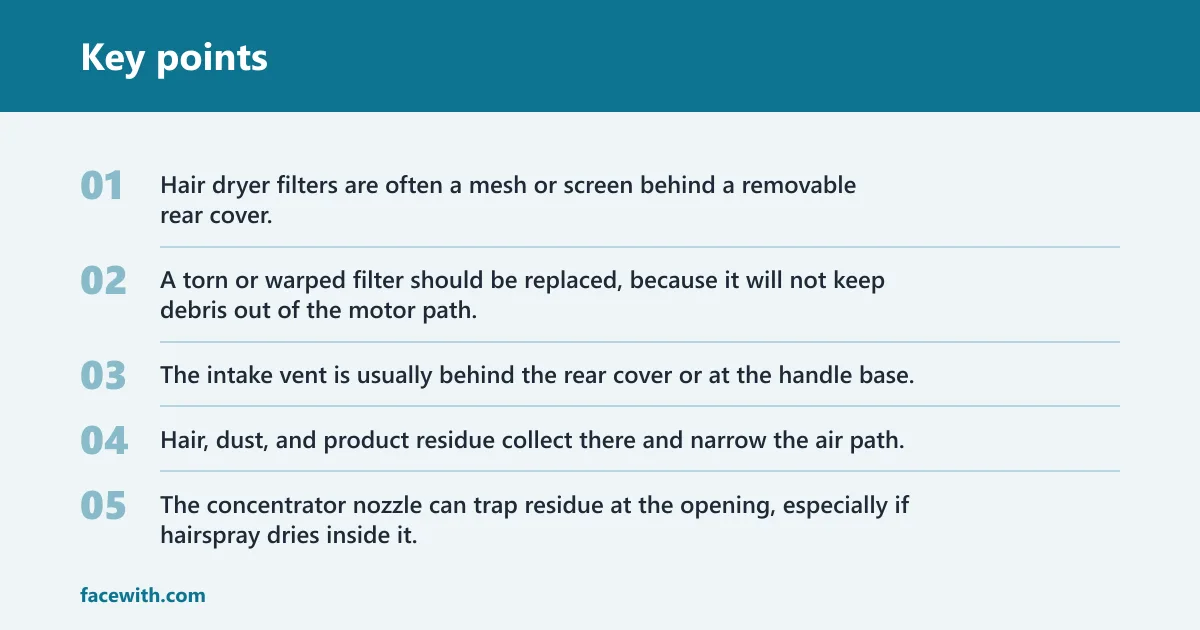
Hair dryer filters are often a mesh or screen behind a removable rear cover. If the filter is removable, clean it regularly; if it is non-removable, brush the exposed surface and the surrounding vent slots. A torn or warped filter should be replaced, because it will not keep debris out of the motor path.
Blocked intake vent
The intake vent is usually behind the rear cover or at the handle base. Hair, dust, and product residue collect there and narrow the air path. That restriction cuts airflow first, then raises internal heat, which is why a dryer can feel hot but still dry poorly.
Residue in the nozzle or fan path
The concentrator nozzle can trap residue at the opening, especially if hairspray dries inside it. If the buildup keeps returning after cleaning the filter and intake, residue may also be on the motor fan blades. That area needs safe disassembly; do not soak electrical components.
Say your dryer has a rear screen packed with fluffy dust, but the nozzle looks clean. Clean the screen first and test again before opening anything else. A different model with a sticky nozzle opening may need the nozzle washed separately, even if the filter still looks fairly clear.
Hair dryer clog matrix
| Symptom | Likely clogged component | Safest fix | Replace vs clean |
|---|---|---|---|
| Weak airflow | Lint filter, intake vent, or fan blades | Brush the screen, vacuum the intake, then test on low heat | Clean first; replace if airflow stays weak after cleaning |
| Burning smell | Dust on the filter, residue near the nozzle, or lint in the fan path | Unplug, clean all accessible buildup, and stop if odor remains | Replace if the smell persists or parts are melted or warped |
| Intermittent shutoff | Thermal cutoff triggered by blocked airflow | Clean the intake and let the dryer cool fully before retrying | Clean first; replace if shutoff repeats after a clear airflow path |
| Visible dust at intake | Rear filter or handle-base vent | Use a brush and vacuum attachment on the outer screen | Clean; replace only if the screen is torn, warped, or missing |
| Product buildup in the nozzle | Concentrator nozzle opening | Remove it and wash it separately, then dry fully | Replace if cracked, soft, or warped |
What causes a hair dryer to lose airflow?
Airflow drops when any part of the air path narrows: filter, intake vent, fan blades, or nozzle. The dryer may still heat up, but less air moves through it, so drying takes longer and the housing can run hotter than normal. Clothes or hair may feel very hot before they actually finish drying.
Lint and dust buildup
Lint ignites easily, so even a thin layer matters. Dust tends to cake onto the screen first, then pack into the intake vent and fan area. A blocked vent can raise heat quickly and may increase fire risk.
Styling-product residue
Hairspray, mousse, dry shampoo, and serum can leave a sticky film that catches lint. That residue often shows up around the nozzle opening and rear screen, especially if the dryer is stored before the parts are fully cool and dry. Clean residue with a dry brush or a barely damp cloth on non-electrical parts only.
Motor fan blockage
Blades inside the motor fan can collect lint, which reduces airflow even if the outside screen looks fairly clear. This is the point where the job gets more invasive. If the housing must come apart to reach the fan, stop if the design is not meant for user service.
Can lint build up inside a hair dryer?
Yes. Lint can collect inside the intake path, around the fan, and behind the nozzle, especially if the filter is damaged or ignored. A removable filter is the easiest place to catch it early. A non-removable screen still needs regular brushing, because blocked airflow starts there and works inward.
How often should I clean my hair dryer filter?
For regular home use, clean the filter about every 1 to 2 weeks, and more often if you use heavy styling products or notice dust near the rear cover. If the dryer is used daily in a bathroom, checking it every few uses is safer than waiting for visible buildup.
A common first-timer mistake is ignoring the lint screen until the airflow slows to a trickle. By then, the screen is often already restricted enough to slow drying and trigger protection shutoff. A quick check at the rear cover takes less time than clearing melted residue later.
When should you stop using it?
Stop using the dryer if it smells burnt or hot plastic, shuts off repeatedly, or still runs hot after the intake has been cleaned. A torn filter, warped nozzle, or repeated overheat event means the problem is no longer a simple clog. Keep using it only if the airflow path is clear and the dryer runs normally afterward.
Burning smell or hot plastic odor
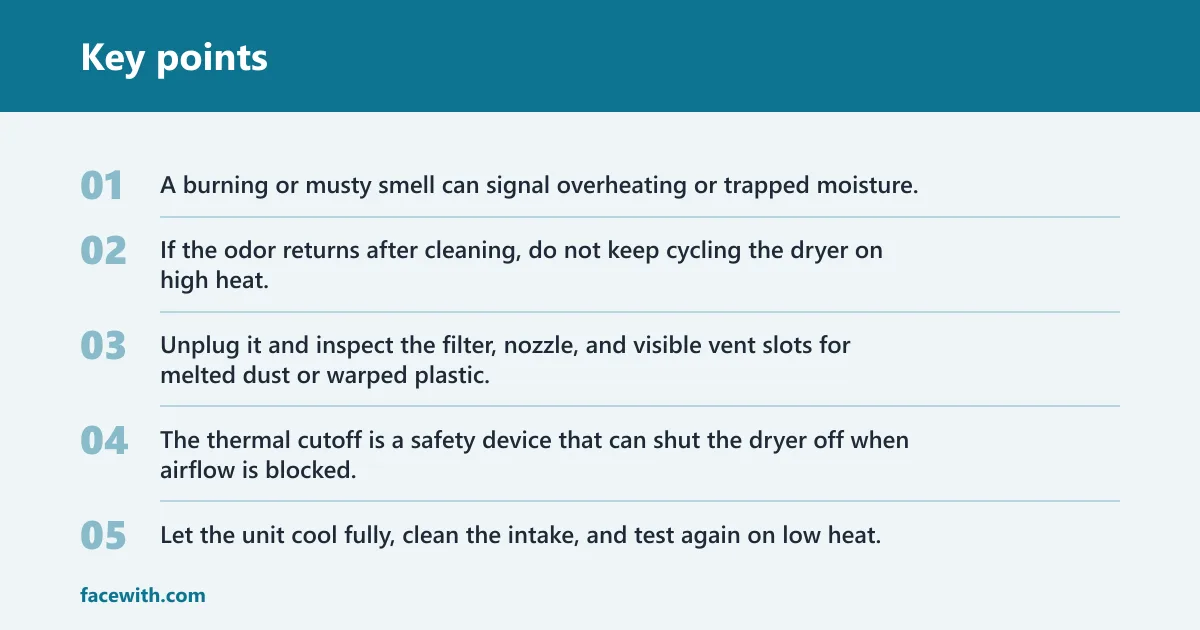
A burning or musty smell can signal overheating or trapped moisture. If the odor returns after cleaning, do not keep cycling the dryer on high heat. Unplug it and inspect the filter, nozzle, and visible vent slots for melted dust or warped plastic.
Thermal cutoff or overheat protection keeps tripping
The thermal cutoff is a safety device that can shut the dryer off when airflow is blocked. Let the unit cool fully, clean the intake, and test again on low heat. If it still cuts out, the motor path may be blocked deeper inside, or the safety part may need replacement.
Torn filter, warped nozzle, or recurring blockage
Replace parts that no longer hold their shape. A torn mesh cannot trap debris, and a warped nozzle can restrict air at the outlet even after cleaning. If the same clog returns quickly, the dryer may need service or replacement rather than another cleaning cycle.
Common mistakes
- Cleaning only the outside grille while leaving the rear filter packed with lint.
- Using water on the dryer body or any live electrical part.
- Blasting compressed air too hard and pushing debris deeper into the housing.
- Reassembling parts before they are fully dry.
- Ignoring a filter that is torn, warped, or missing sections.
- Continuing to use the dryer after repeated overheating or shutoff.
Suppose the filter looks clear but the dryer still smells burnt on low heat. The next place to check is the nozzle opening and the vent slots around the handle base. If the smell remains after a full cleaning, stop and treat it as a replacement problem, not a cleaning problem.
Frequently asked questions
How do I clean a clogged hair dryer?
Unplug it, let it cool, remove the nozzle, brush the filter and intake, and vacuum loose debris with a brush attachment. Wash only removable nozzle parts, then dry them fully before reassembly. If the dryer still runs hot after that, the blockage may be inside the fan area.
Why does my hair dryer smell burnt?
A burnt smell usually points to overheating, trapped dust, or residue baking near the heating path. If the odor comes with weak airflow or shutoff, clean the intake and nozzle first. If the smell does not clear, stop using the dryer and inspect for warped plastic or melted dust.