
How to Clean a Hair Dryer Filter for Better Airflow

Clean a hair dryer filter every 1–2 months, and sooner if airflow drops or lint is visible. Wash only washable screens, and replace cracked foam or damaged mesh. A clogged filter can slow drying, overheat the dryer, and may strain the motor. This guide shows how to clean each filter type, tell filter trouble from vent or motor problems, and decide when to replace or service the dryer.
What you’ll need
- Soft brush
- Vacuum cleaner with a crevice tool or brush attachment
- Warm soapy water, only if the manual allows washing
- Dry towel or drying rack
- Hair dryer manual
How do you clean a hair dryer filter?
Unplug the dryer, let it cool completely, remove the rear filter or intake screen, and clear dry debris with a soft brush first. Wash removable parts only if the manual allows it, then vacuum the intake housing and vent path. Let every washed part dry fully before you put it back.

- Unplug the dryer and let it cool fully.
- Find the rear air-intake filter, not the outlet nozzle.
- Remove the rear filter or intake screen as the manual shows.
- Brush away lint, hair, dust, and residue from both sides.
- Wash removable mesh only if the manual says that model allows water.
- Vacuum the filter compartment and crevices, then let all parts dry.
- Reinstall the filter, fit the parts back carefully, and check airflow.
Say your dryer takes noticeably longer to dry a shoulder-length haircut and the rear screen is gray with lint. A soft brush may restore flow if the blockage is dry debris. If the screen still looks coated after brushing, product residue is probably part of the problem and washing may be allowed only on the removable part.
Where is the filter on a hair dryer?
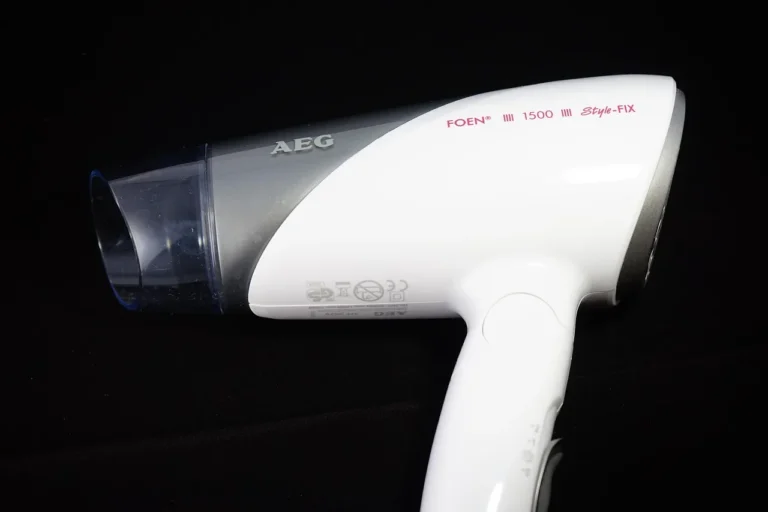
On many dryers, the filter sits at the rear intake, where air enters the housing. It is usually a mesh or multi-layer screen. The vent path is the route air moves through the dryer, while the surrounding intake housing is the casing around the filter and should also be cleaned.
Do not treat those three areas as one part. The filter catches lint and hair, the vent path can trap debris deeper inside, and the housing can collect dust and product residue around the edges. Cleaning only the visible screen can leave the rest of the airflow path blocked.
How do you remove different filter types safely?
Use the manual before pulling on anything. A removable mesh filter often hand-twists or slides off. An integrated filter design is built into the housing and may need partial disassembly. If the manual does not show a removal step, do not force the part off.
- Check the model page in the manual for the rear filter design.
- Turn the filter ring or slide the screen only if the manual shows that motion.
- Stop if a part resists or feels fixed into the housing.
- Use a soft brush around the edge if the screen is integrated.
Can I wash a hair dryer filter with water?
Only if the manual allows it. Warm soapy water fits some removable mesh filters, but not every model. Integrated or non-removable designs should not be forced into water-cleaning if the manufacturer does not permit it. After washing, the part must dry fully before reinstalling.
Hair dryer filters may clog in about 2–3 weeks without regular cleaning, especially when styling products leave residue on the mesh. Dry brushing clears loose lint, but sticky buildup often needs water only on removable parts that are approved for washing.
How long should a hair dryer filter dry before reinstalling?
Removable filters should dry for 24 hours before reinstalling. If the part feels cool, damp, or heavy, it is not ready. Reinstalling early can trap moisture in the housing, invite residue buildup, and keep airflow weak even after cleaning.
Lay the filter on a dry towel or rack with open air on both sides. Do not use heat to speed drying unless the manual clearly allows that method. A fully dry screen should feel light, firm, and free of water beads before it goes back into the dryer.
Filter decision table

| Filter type | Symptoms | Safe cleaning method | When to stop and replace or service |
|---|---|---|---|
| Removable mesh | Visible lint, weaker airflow, longer drying time | Brush first; vacuum the housing; wash only if the manual allows it | Stop if the mesh is torn, warped, or will not stay seated |
| Washable mesh | Sticky residue, dust matting, slow drying | Brush, then wash with warm soapy water; dry for 24 hours before reinstalling | Stop if residue remains after washing or the screen deforms |
| Integrated or non-removable | Dust at the rear intake, weak airflow after visible cleaning | Brush the accessible surface; vacuum the compartment; follow the manual for any partial disassembly | Stop if removal is not listed, if the housing cracks, or if airflow stays weak |
| Damaged filter | Broken mesh, warped plastic, missing sections, overheating shutdowns | Do not keep cleaning; inspect the housing and manual | Replace the part or send the dryer for service |
Post-clean checklist: fit the parts back carefully, check airflow, and stop if heat or airflow still seems abnormal. If the dryer still feels hot or the stream remains weak, the vent path or internal parts may need separate attention.
Why is my hair dryer airflow still weak?

If airflow stays weak after cleaning the filter, the vent path may still be clogged, the filter may be damaged or warped, or internal parts may need service. A clogged hair dryer filter can reduce airflow by up to 50%, but a clean screen that still underperforms points beyond the screen itself.
- Unplug the dryer again and inspect the intake housing with a flashlight.
- Vacuum the vent opening and crevices with a gentle attachment.
- Check the manual for any deeper cleaning access or service steps.
- Stop if the housing is cracked, the fan area sounds rough, or airflow remains weak.
Suppose the filter looks clean after brushing, but the dryer still takes 20 minutes longer than usual to dry a medium-length style on a low setting. That pattern points away from the screen alone and toward a blocked vent or an internal fault that should not be forced through more cleaning.
What happens if a hair dryer filter is clogged?
A clogged filter restricts intake air, slows drying, and can trigger overheating protection on some dryers. Conason says internal components can exceed 200°F during operation, so a blocked intake is a safety issue, not only a performance issue. Some dryers shut off when airflow is too low.
Longer drying times are often the first warning sign. If the dryer suddenly needs repeated passes or the rear intake feels packed with lint, clean it before running the dryer again. Continued use against a blocked intake can strain the motor and raise heat inside the housing.
When should I replace a hair dryer filter?
Replace the filter when the mesh is torn, the foam is cracked, the plastic is warped, or the part stays clogged after proper cleaning. If the model uses an integrated filter that cannot be removed without damage, service may be the better choice than repeated forcing.
Replacement is also the better path when residue returns quickly after cleaning or when the part no longer fits tightly. A loose screen can let dust bypass the intake and make the airflow problem come back fast.
Common mistakes
Most cleaning failures come from cleaning the wrong part, reinstalling too early, or ignoring residue that needs more than dry brushing. Keep the filter, vent path, and housing separate in your mind, because each one can block airflow in a different way.
- Forcing a non-removable filter off the housing.
- Putting back a damp screen before the full 24 hours has passed.
- Stopping after the visible screen and leaving the housing dirty.
- Ignoring product buildup that brushes alone will not remove.
- Skipping the manual when a model uses an integrated design.
Cleaning only the rear screen is a common first-timer mistake. The intake housing can hold fine dust, and the vent path can trap debris deeper inside, so weak airflow may remain even when the visible filter looks neat.
How often should you clean a hair dryer filter?
Clean the filter every 1–2 months for typical home use, and sooner if airflow drops, lint is visible, or drying time seems to get longer. The same source recommends monthly cleaning, and hOn advises cleaning the dryer filter after each cycle once regular use resumes. Use the manual first for model-specific timing.
- High-use styling or shared use: inspect weekly.
- Regular home use: clean about monthly.
- Visible lint, product residue, or weak airflow: clean right away.
- After a shutoff from heat protection: inspect before using again.
Prevention is simple here: wipe the intake area after heavy styling sessions and check the rear screen before the next drying cycle if buildup is easy to see. That small habit reduces the chance of a blocked intake and the extra heat that follows.