
Which Type of Face Massager Is Best for Beginners?

For beginners, a simple manual roller or gua sha tool is often the easiest way to start before moving to powered devices. Buying a stronger tool too early often means wasted money, clumsy technique, or irritated skin. This guide ranks face massager types by beginner ease and gives a simple pick based on comfort, budget, and how much routine you can keep.
Face massager types at a glance

The main trade-off is simple: the easiest tools need the least setup, while powered devices can add more features at the cost of more learning, more maintenance, and more ways to overdo pressure or treatment time. Manual tools sit at the low-friction end. Microcurrent, LED, and percussive options ask for more attention to technique, timing, or attachments.
| Type | Beginner ease | Setup burden | Main beginner use | Hidden cost or hassle |
|---|---|---|---|---|
| Jade roller | Very easy | Low | Depuffing and relaxation | Needs glide product |
| Gua sha | Easy to moderate | Low | Puffiness and facial tension | Technique matters more than rolling |
| Kansa wand | Easy | Low | Gentle massage and relaxation | Still needs a glide medium |
| Vibrating face massager | Moderate | Low to moderate | Quick depuffing | Charging and mode control |
| Microcurrent face massager | Moderate to advanced | Moderate to high | Lifting and contouring | Conductive gel and technique |
| LED face massager | Moderate | Moderate | Fine lines or acne targeting | Time-based sessions and device-specific claims |
| Percussive face massager | Moderate to advanced | Moderate | Jaw and temple tension relief | Attachment choice and pressure control |
| Cleansing brush hybrid | Easy | Moderate | Skin cleansing and product removal | Cleaning between uses |
Which face massager type is easiest for beginners?
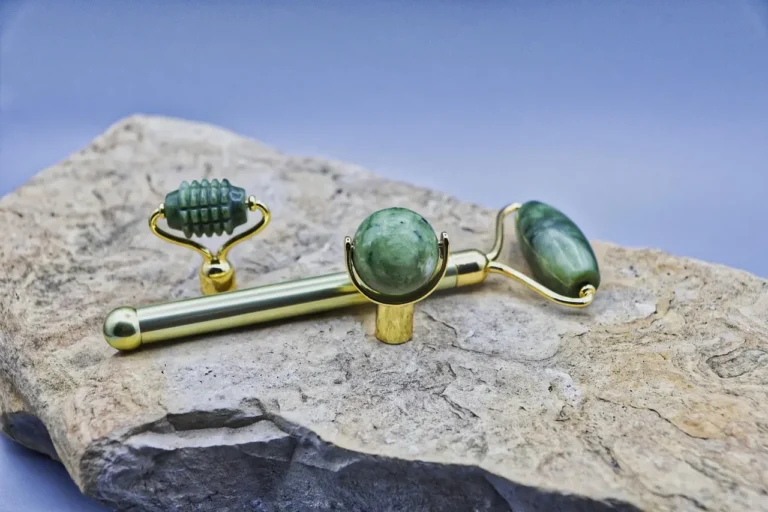
The easiest face massager for beginners is a manual tool, especially a jade roller. It has a low learning curve, no batteries or charging, and it is forgiving if you keep pressure light. If you want the simplest first step, start with a tool that only needs a glide medium and a few slow passes.
Lowest-friction starter picks
Jade rollers are the most straightforward for daily use because the motion is obvious: roll outward and upward with light pressure. Gua sha asks for more angle control, so it is a little more technique-dependent. Kansa wands sit in between and can feel intuitive once you learn to move slowly.
Vogue says face massagers can reduce puffiness, move fluid away from the face, and ease jaw and brow tension. That benefit does not make every device beginner-friendly. The lower the setup burden, the easier it is to keep the habit going without irritation or overuse.
Where manual tools beat devices
Manual tools win on cost, simplicity, and control. You do not need to charge them, pair them, or learn multiple modes. You also have fewer ways to overdo it. With a face oil, serum, or cream, the tool glides more smoothly and is less likely to tug at dry skin.
Where devices make sense early
Devices make sense early only if your goal is specific and you are willing to follow instructions. A vibrating tool can be a good beginner transition because it adds speed without much setup. LED and microcurrent can work for home use, but they ask for more time discipline and closer attention to product instructions.
Face massager decision matrix

This table shows the beginner burden, not the marketing promise. A lower score means less friction. The best first buy depends on your profile: low budget, sensitive skin, a short routine, or a willingness to learn a device with more steps.
| Type | Learning curve | Setup effort | Skin sensitivity risk | Expected routine time | Best first buy for |
|---|---|---|---|---|---|
| Jade roller | 1/5 | 1/5 | 1/5 | 3-5 minutes | Absolute beginners who want simple depuffing |
| Gua sha | 2/5 | 1/5 | 2/5 | 5-10 minutes | Beginners willing to learn pressure and angle control |
| Kansa wand | 2/5 | 1/5 | 2/5 | 5-10 minutes | Beginners who want a slower, guided massage feel |
| Vibrating face massager | 3/5 | 2/5 | 2/5 | 3-7 minutes | People who want faster depuffing with less manual effort |
| Cleansing brush hybrid | 2/5 | 2/5 | 2/5 | 2-4 minutes | Routine minimalists who want one tool for cleansing |
| LED face massager | 3/5 | 3/5 | 2/5 | 10-20 minutes | Beginners with a fixed treatment goal and patience |
| Microcurrent face massager | 4/5 | 4/5 | 3/5 | About 5 minutes | Users ready for a more technical lifting routine |
| Percussive face massager | 4/5 | 3/5 | 3/5 | 3-8 minutes | People who want jaw and temple tension relief |
Learning curve scores
Manual rollers score best because the motion is obvious. Gua sha and kansa wand tools require a little more practice, mainly to avoid tugging and to keep pressure light. Microcurrent scores worse because it is less forgiving: you need conductive gel, better pathing across the face, and careful use of the device’s settings.
Setup effort scores
Setup effort is where many beginner purchases fail. A manual tool needs only a glide medium. Microcurrent adds conductive gel, which is both a leave-on formula and part of the operating cost. LED adds time. Cleansing brushes add cleanup between uses. A device with intensity settings and an auto shutoff timer is easier to manage than one with only one mode and no guardrails.
Skin sensitivity risk scores
Sensitive or acne-prone beginner skin usually does better with the least aggressive option that still meets the goal. Manual tools with a face oil, serum, or cream are typically the safest start because you can control pressure closely. Over-massaging, dry dragging, or pressing too hard are common failure points. Microcurrent can be fine, but only if the gel and instructions are followed exactly.
Expected routine time scores
Short routines are easier to keep. A vibrating tool can fit into a brief routine, and microcurrent is often framed as a 5-minute session. The same source says the Joanna Czech Facial Massager is recommended for about seven minutes a day. LED can take longer because the treatment is time-based, which matters if your routine needs to stay quick.
Suppose your skin is dry and you press a roller across bare cheeks. The tool may catch instead of glide, and that pulling can make the routine feel irritating rather than calming. A few drops of serum or cream change that outcome fast.
Manual tools vs devices
Manual tools are the easiest place to start. Devices can add more specific effects, but the setup burden rises with them. The right choice depends on whether you want a low-cost habit, a faster routine, or a more targeted treatment goal such as contouring, acne support, or tension relief.

Jade roller, gua sha, and kansa wand
Jade rollers are best for puffiness and relaxation. Gua sha is better when you want more pressure control and can spend a little time learning the stroke angle. Kansa wands sit in the same low-tech group and can be a good bridge between rolling and powered devices.
The main advantage here is control. The main risk is overdoing pressure. If the skin feels warm, red, or stingy after a session, the routine is too aggressive or the glide medium is not sufficient.
Vibration, LED, microcurrent, and percussive options
Vibrating face massagers use motorized vibration and can give quick depuffing with an easy grip. That makes them a good beginner transition tool. Microcurrent uses low-voltage current and is more technique-dependent, but it can suit a short, structured routine when the goal is lifting or contouring.
LED devices use red light or blue light for time-based treatment. Allure says the Solawave 4-in-1 Skincare Wand uses red light for fine lines and blue light for acne. That is a narrower promise than general massage, so you should buy it for that specific goal, not for simple hands-on massage.
Percussive tools are different again. They use gentle pressure with a massage attachment and are more often chosen for jaw or temple tension relief than for purely cosmetic massage. The same source says the TheraFace Pro includes microcurrent, percussion, cleansing, and LED light therapy, and it has six attachments. That makes it versatile, but not the easiest first purchase.
Cleansing brush hybrids as a routine shortcut
Cleansing brush hybrids are attractive to beginners who want one tool for washing and light massage. Silicone bristles can help with product removal and keep the routine short. The drawback is hygiene upkeep: they need cleaning between uses, or residue can build up.
Picture a beginner with a 2-minute morning routine and a small bathroom shelf. A silicone cleansing hybrid may fit better than a separate roller plus cleanser because it combines steps. The trade-off is that the cleaning step becomes part of the habit.
Is jade roller or gua sha better for beginners?
A jade roller is usually better for beginners because it is easier to use correctly. Gua sha can be excellent, but it asks for more angle control, more attention to pressure, and more patience. If you want the least confusing first buy, start with the roller.
Jade roller for simple glide and depuffing
The roller is the simplest manual tool to learn. It is easy to use around the cheeks, under the eyes, and along the jawline. It is also the better option if your main goal is puffiness or a calming routine before bed.
Gua sha for technique and pressure control
Gua sha is better when you want to learn a more deliberate massage pattern. It can help with facial tension, but only if the pressure stays light and the skin has enough glide. New users often press too hard. That is the error to avoid.
Where kansa wand fits
Kansa wand tools fit between the two. They feel more hands-on than a roller and less technical than many devices. For a beginner who wants a slightly more purposeful massage without batteries or charging, it is a fair middle ground.
Are microcurrent face massagers too advanced for beginners?
Microcurrent is not too advanced for every beginner, but it is more technical than manual tools. You need conductive gel, some patience with the routine, and comfort with device settings. If you want simple depuffing, it is probably more than you need. If you want lifting and contouring, it can be worth the learning curve.
Why conductive gel matters
Microcurrent devices usually require conductive gel or primer. That product helps the current work and gives the device glide, so it is not optional busywork. It also adds to the operating cost. Without it, comfort and performance can both drop.
What should beginners notice? The gel should be a leave-on formula and should suit your skin type. If your skin is acne-prone or reactive, the gel choice matters as much as the device itself.
What the 5-minute routine adds
BestAdvisor says the NuFACE microcurrent face massager has an auto shutoff timer after five minutes and five intensity levels. Those features help beginners avoid overuse, but they do not remove the need to learn placement and pressure. A short routine is still technical if the device depends on precise movement.
Who should wait before buying microcurrent?
If you dislike steps, skip microcurrent for now. If your skin is very reactive, start with a manual tool and a glide product first. If your budget only allows one purchase and you are unsure you will keep up a routine, a roller or gua sha is the safer buy.
Choose manual tools if… / Choose microcurrent if…
Manual tools are the better first buy when your main goal is ease. Microcurrent makes sense when your goal is more specific and you are willing to follow a set routine. The right choice depends less on hype and more on how much setup you will actually repeat.
Choose manual tools if you want low cost and low setup
Choose a manual roller, gua sha, or kansa wand if you want the fewest steps. Choose manual tools if you have sensitive beginner skin, if you dislike charging devices, or if you want a short routine that can be done with face oil, serum, or cream. These tools are also the safest bet for learning pressure control.
Choose vibrating or cleansing brush hybrids if you want speed
Choose a vibrating tool if you want quick depuffing and an easy grip with a short routine. Choose a cleansing brush hybrid if you want one device for washing and light massage, and you are willing to clean it after use. These are better transition tools than technical devices.
Choose LED or percussive tools if you want a more specific target
Choose LED if you want a time-based tool aimed at fine lines or acne. Choose percussive if your main issue is jaw or temple tension. Both are more specialized than a roller, so they make sense when your goal is narrow and your routine can support the added steps.
Frequently asked questions
Which type of face massager is best for beginners?
The best face massager for beginners is usually a manual jade roller or a simple gua sha tool. They have the lowest setup burden, cost less than powered devices, and are easier to fit into a routine. A glide product is still important, because dry skin increases tugging and irritation.
What is the easiest face massager to use daily?
A jade roller is the easiest daily option because it is quick, intuitive, and low maintenance. You do not need charging, attachment changes, or a timer. If you want a little more pressure control, gua sha is the next step, but it asks for more technique.
Which face massager is safest for sensitive beginner skin?
Manual tools used with a face oil, serum, or cream are usually safest for sensitive beginner skin. They let you control pressure and avoid extra heat, current, or vibration. The biggest risks are too much pressure, dry dragging, and over-massaging, so a light touch matters most.
How often should a beginner use a face massager?
A beginner can usually start with a few times per week, then increase only if the skin stays calm. Short sessions are better than long ones at first. For devices with timers, such as two-minute or five-minute limits, follow the device guidance and stop if irritation appears.
Can beginners use LED face massagers at home?
Yes, beginners can use LED face massagers at home if they follow the device instructions closely. LED is less about physical pressure and more about staying consistent with time-based sessions. It is best for people who want a specific target, such as red light for fine lines or blue light for acne.
Do face massagers really work for beginners?
They can work for beginners, but the effect depends on the tool and the goal. Manual massage may help move fluid from the face and ease facial tightness, while some devices target lifting, acne, or muscle tension more directly. Results are usually gradual, and routine consistency matters more than force.